For those who didn’t get enough on Constitution Day in September, there is Bill of Rights Day. Between gun control, NSA surveillance, and gay marriage, you can easily make the case for the Bill of Rights having its own day for recognition. The following are just a few resources for learning more about the Bill of Rights. Continue reading
Tag Archives: Social Studies
Ten Websites for Teaching with Political Cartoons
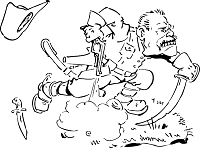 It’s not hard to find lesson plans on political cartoons on the internet. However, many of them seem more about the lesson plan part than the cartoon part. Continue reading
Using Primary Sources in the Primary Grades
The following article is from the Office of Educational Research and Improvement which is part of the Department of Education.
THIS DIGEST WAS CREATED BY ERIC, THE EDUCATIONAL RESOURCES INFORMATION CENTER. FOR MORE INFORMATION ABOUT ERIC, CONTACT ACCESS ERIC 1-800-LET-ERIC
What do a stamped Christmas postcard dated 1910, a Confederate one hundred dollar bill, soda pop bottles from Egypt, ice tongs, a rug beater, and a woven prayer rug from the Middle East with a picture of the Kaaba at Mecca all have in common? These and many other artifacts can become primary sources, the very real “stuff” of the social studies that can so effectively engage the young learner in active learning. The use of primary sources in the classroom is a way for students to develop the intellectual curiosity that leads to further research and increased awareness of the world around them. Continue reading
Teaching Archaeology
The following article is from the Office of Educational Research and Improvement which is part of the Department of Education.
THIS DIGEST WAS CREATED BY ERIC, THE EDUCATIONAL RESOURCES INFORMATION CENTER. FOR MORE INFORMATION ABOUT ERIC, CONTACT ACCESS ERIC 1-800-LET-ERIC
How could handchipped stones, ancient ruins, old broken dishes, and antiquated garbage help students learn about the world and themselves? Within archaeology, these seemingly irrelevant items can enlighten students about the world around them through science, culture, and history. By using archaeology in the classroom, educators can lead students on learning adventures while engaging them in thinking about life in the past and who we are as humans today. Continue reading
Teaching About the United States Supreme Court
The following article is from the Office of Educational Research and Improvement which is part of the Department of Education.
THIS DIGEST WAS CREATED BY ERIC, THE EDUCATIONAL RESOURCES INFORMATION CENTER. FOR MORE INFORMATION ABOUT ERIC, CONTACT ACCESS ERIC 1-800-LET-ERIC
The Supreme Court is one of the most important institutions in the United States. Thus, social studies teachers should emphasize the significance of the Court in our nation’s history. This ERIC Digest highlights the origin and foundations of the Supreme Court, discusses the changing role of the Supreme Court in the United States, and recommends World Wide Web resources helpful in teaching and learning about the Supreme Court. Continue reading
Teaching About the United States Congress
The following article is from the Office of Educational Research and Improvement which is part of the Department of Education.
THIS DIGEST WAS CREATED BY ERIC, THE EDUCATIONAL RESOURCES INFORMATION CENTER. FOR MORE INFORMATION ABOUT ERIC, CONTACT ACCESS ERIC 1-800-LET-ERIC
The United States Congress is a central institution of government in the United States. It is also a central focus in many social studies classrooms. This ERIC Digest treats constitutional foundations of Congress, development of Congress, and World Wide Web resources for teaching about Congress. Continue reading
Teaching About the Louisiana Purchase
 The following article is from the Office of Educational Research and Improvement which is part of the Department of Education.
THIS DIGEST WAS CREATED BY ERIC, THE EDUCATIONAL RESOURCES INFORMATION CENTER. FOR MORE INFORMATION ABOUT ERIC, CONTACT ACCESS ERIC 1-800-LET-ERIC
The year 2003 marks the bicentennial of the 1803 Treaty of France, by which the United States of America acquired the Louisiana Territory, an area of more than 828,000 square miles. Upon this acquisition, known as the Louisiana Purchase, the territory of the United States doubled. Historians consider the Louisiana Purchase to be a landmark event or turning point in American history. Continue reading
Teaching about Japanese-American Internment
 The following article is from the Office of Educational Research and Improvement which is part of the Department of Education.
THIS DIGEST WAS CREATED BY ERIC, THE EDUCATIONAL RESOURCES INFORMATION CENTER. FOR MORE INFORMATION ABOUT ERIC, CONTACT ACCESS ERIC 1-800-LET-ERIC
When the United States entered World War II following the Japanese attack on Pearl Harbor on December 7, 1941, Japanese immigrants and their descendants, including those born in the United States and therefore citizens by birth, were placed in a very awkward situation. The immigrants were resident aliens in the United States, a country at war with their country of birth. Continue reading
Teaching about Due Process of Law
The following article is from the Office of Educational Research and Improvement which is part of the Department of Education.
THIS DIGEST WAS CREATED BY ERIC, THE EDUCATIONAL RESOURCES INFORMATION CENTER. FOR MORE INFORMATION ABOUT ERIC, CONTACT ACCESS ERIC 1-800-LET-ERIC
Fundamental constitutional and legal principles are central to effective and powerful instruction in the K-12 social studies curriculum. To become competent citizens, students need to develop a rich understanding of the principles on which their society and government rest. Few principles are as important in the social studies curriculum as due process of law. Continue reading
Teaching about Africa
The following article is from the Office of Educational Research and Improvement which is part of the Department of Education.
THIS DIGEST WAS CREATED BY ERIC, THE EDUCATIONAL RESOURCES INFORMATION CENTER. FOR MORE INFORMATION ABOUT ERIC, CONTACT ACCESS ERIC 1-800-LET-ERIC
People from African countries who visit the United States often are stunned by how little Americans know about African cultures. Africa is a large continent more than three times the size of the continental United States, and it contains over 50 independent countries. One out of every three member states in the United Nations is an African country. One out of every ten people in the world lives on the African continent. Increasingly, the United States has trading and corporate ties to African countries. Now, more than ever, our students need a basic understanding of Africa. Continue reading
